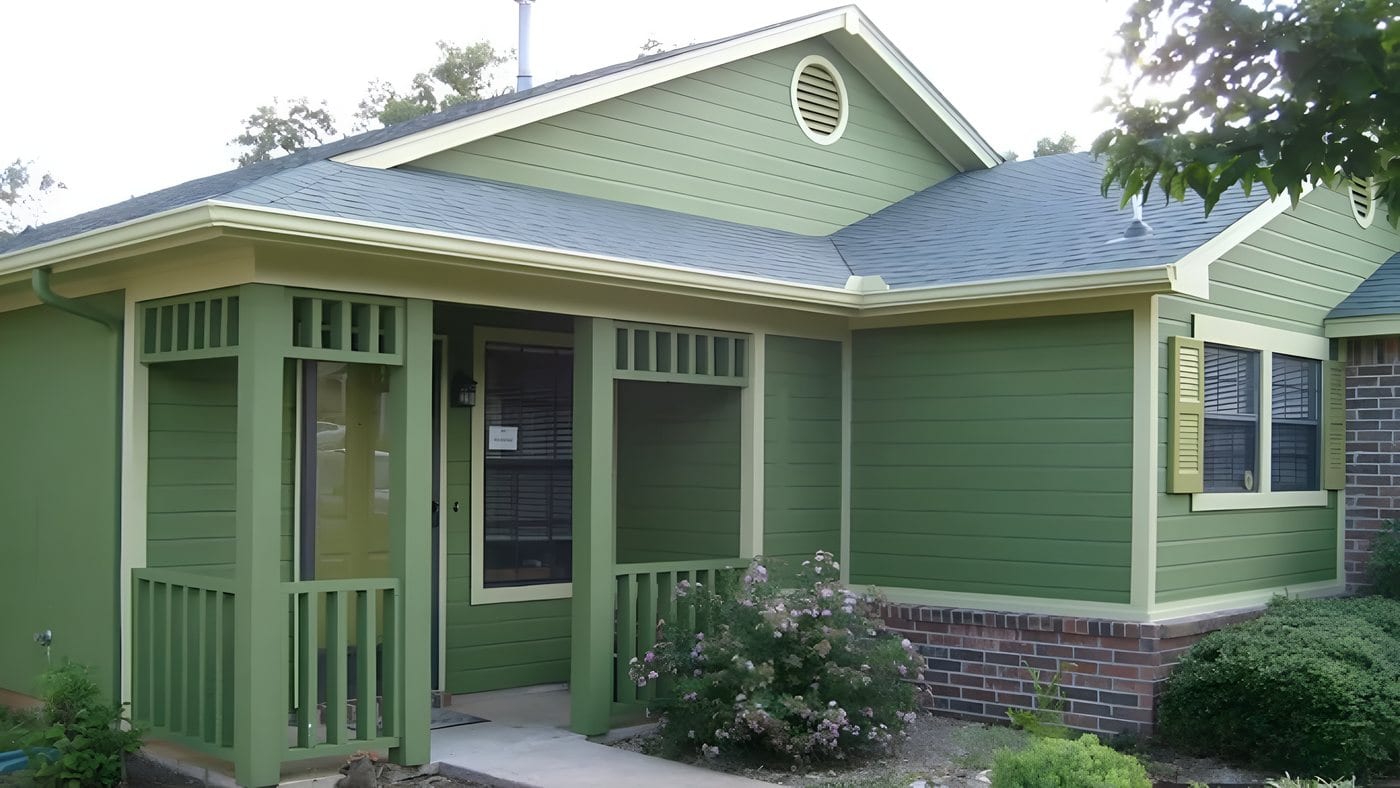
Paint is the cheapest protection a house has and the first thing to fail. On an exterior it is doing a job — sealing end grain, keeping water out of joints, holding UV off the substrate — and when it lets go, the repair underneath costs many times what the repaint would have. NWA Roofing Siding and Gutters handles exterior and interior painting across Northwest Arkansas, on its own or as part of a larger exterior project.
Exterior painting
Preparation is the job. Everything else is application. Ours includes washing to remove chalk, dirt and mildew; scraping and sanding failed coating back to a sound edge; replacing rotted trim rather than painting over it; caulking joints and penetrations; and priming bare wood and any stain-prone areas before topcoat. Paint applied over chalk, over mildew, or over a coating that has already lost its grip will fail on the same schedule the old one did, no matter what it cost per gallon.
What Arkansas weather does to an exterior. South and west elevations take the hardest UV and fail years before the north side — which is why a house often looks fine from the street and poor from the driveway. Summer humidity feeds mildew on the shaded north and east walls. And the wide swing between a July afternoon and a January night moves wood constantly, opening the joints that caulk is there to keep closed.
That gives us two practical rules. We do not spray a house in the middle of a summer afternoon on the sunny side — hot substrate flashes the paint off before it can level and adhere. And we watch the dew point in autumn, because a coating applied too late in the day never fully cures.
Substrates we paint. LP SmartSide and other engineered wood — which must be painted, and whose cut ends must be sealed or they wick water. Fiber cement, including factory-finished board that needs matching. Wood siding, soffit, fascia and trim. Brick and masonry, where the right product matters more than the colour, because a film-forming paint on masonry traps moisture and spalls the face. We do not paint vinyl siding as a matter of course; it can be done with the correct vinyl-safe formulation, but choosing a darker colour than the original will warp the panels.
Interior painting
Walls, ceilings, trim, doors and cabinets. Furniture moved and covered, floors protected, edges cut in by hand rather than taped and hoped for, and the site left clean at the end of each day rather than only at the end of the job.
Interior work also tends to follow a repair, and the repair has to be right first: a water-stained ceiling needs the leak fixed and the stain sealed with a stain-blocking primer, or it will bleed back through the finish coat within weeks. Repainting over an active problem is the most common way interior paint work gets done twice.
Paint as part of an exterior project
Most of our painting happens alongside other work, and the order matters. New siding gets painted after installation and after the caulking, not before. Trim carpentry comes before paint. Gutters go up after the fascia is painted, because painting behind a hung gutter is an awkward job done badly.
Running it as one project rather than four means the sequence is right and nobody has to come back to fix what the next trade disturbed.
What we will tell you honestly
If the substrate is failing, paint is not the answer and we will say so. Rotted trim needs replacing. Siding that has gone brittle needs replacing. A wall that is wet needs the source found first. Painting over any of those buys a season or two and costs the price of the paint job twice.
Free estimates across Benton and Washington County. Call (479) 799-2022.